Study project
On the journey to a new home
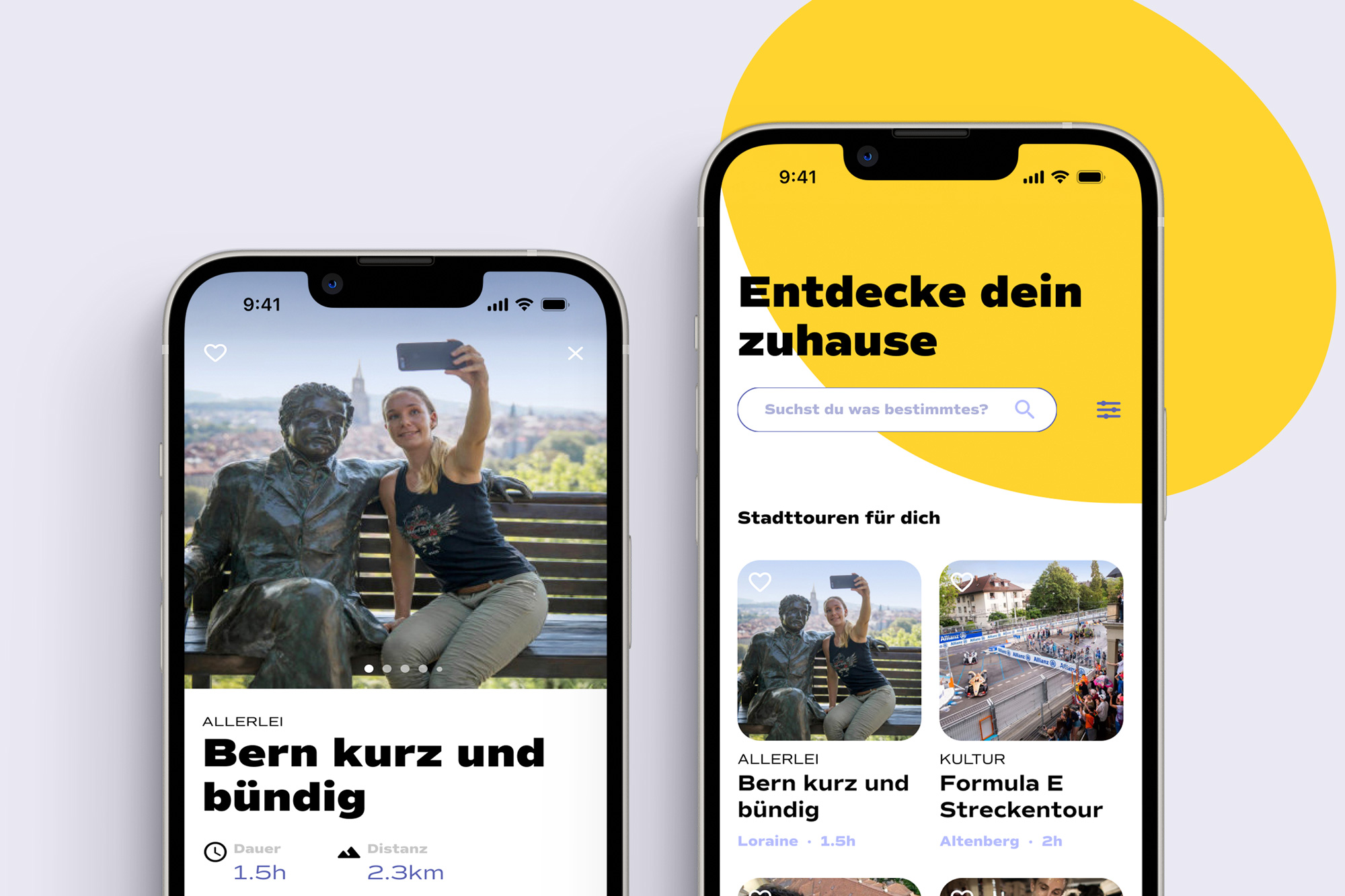
A move doesn't end with the last box. This case study shows how conversations with newcomers led to the creation of an app concept that helps newcomers discover Bern in a playful way, break down social barriers, and gradually feel like a local.
As part of a semester project the task was to develop an app that helps newcomers to the city of Bern to arrive more easily.
The analysis and research phases were conducted in groups, while the concept and design development were individual work. The project followed a user-centred design approach with a strong focus on research, ideation and experience design.
🚨 Problem(s)
Moving to a new city often involves uncertainty. In addition to the various administrative tasks and different administrative matters depending on the region, there are also the emotional and social aspects that come with moving to a new place.
🔍 Research & Discovery
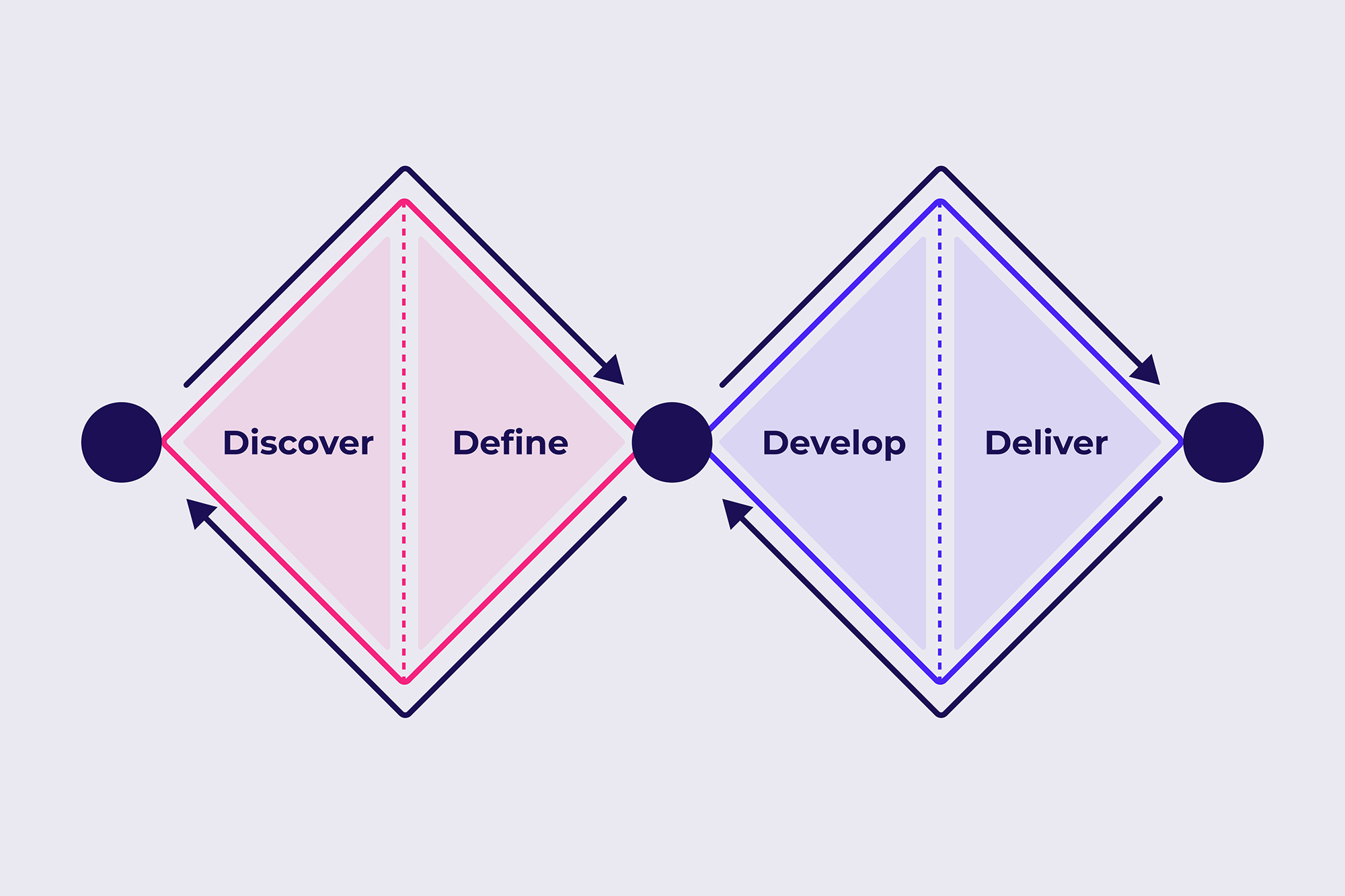
To approach the problem in a structured way, the Double Diamond method was used. The goal was to explore the topic broadly during the discovery phase and gradually narrow down insights to define a focused solution direction.
The research phase started with a stakeholder analysis. We identified who is affected by the product, who should be involved in its development and at which point in the process. This helped clarify different needs and expectations early on.
Through class discussions, it became clear that the solution should not only target creative or culturally interested users. Addressing a broader target group was essential in order to create real value and relevance.
User Interviews
With «Relocate Bern» we wanted to create an app that makes it easier for newcomers from abroad to move to Bern. So far, however, we had hardly any information as a basis. Therefore we decided that interviews should help us to better understand the problems that arise during a relocation process.
«The Gurte is not the Gurte, it is the Güsche! Bernese expressions could sometimes be very confusing.»
Interestingly, all interviewees looked back on their move rather positively. The previous worries and fears often turned out to be unfounded in retrospect and the move even went better than hoped.In individual cases, there were worries about the day of the move itself, such as whether everything would work out or whether they would be able to cross the border without any problems.
What concerned almost all interviewees, however, was the fear of future social integration. Especially when moving alone.
Based on the interviews, behavioural patterns were clustered to see where there are commonalities. So we finally focused on settling down in Bern after the move.
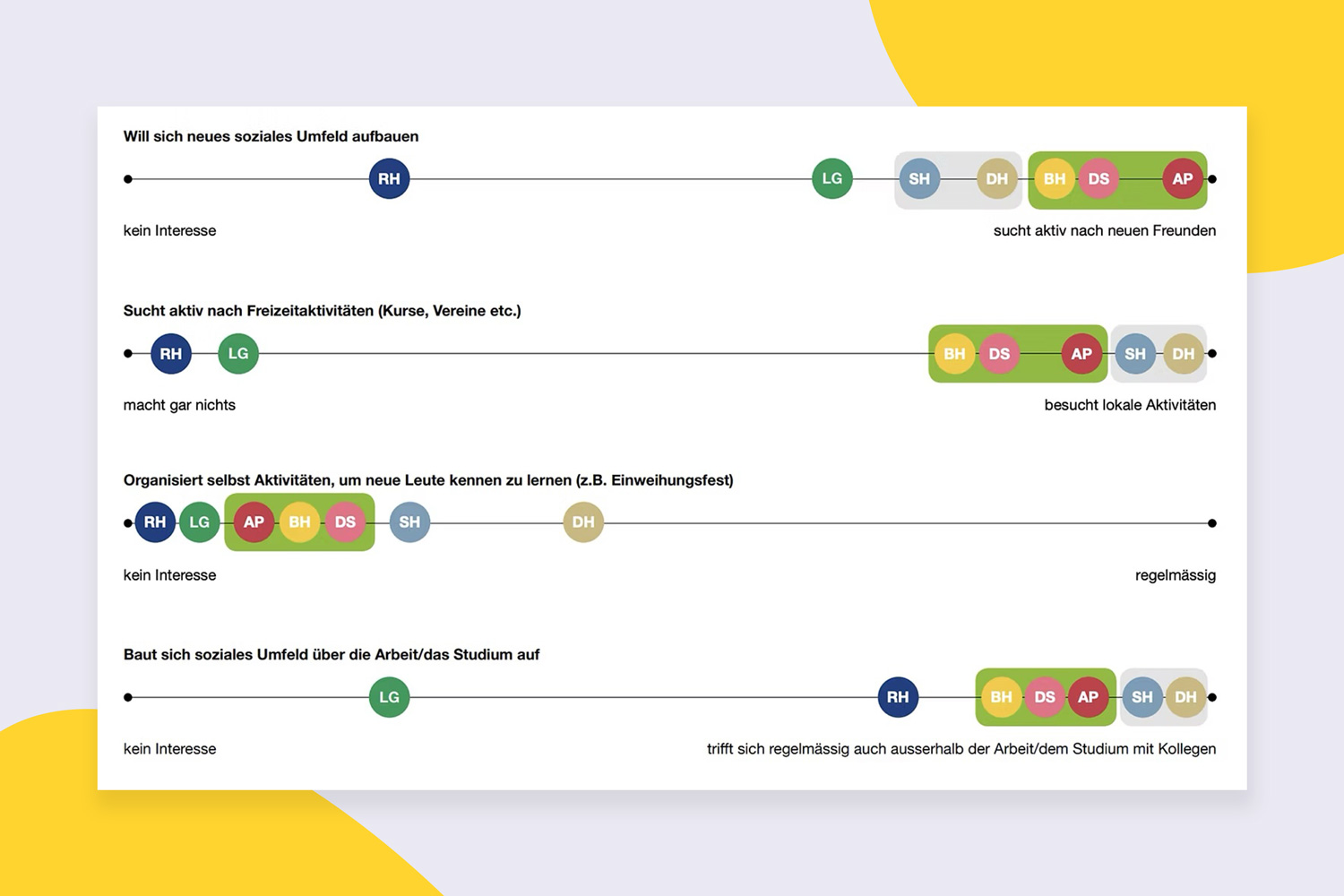
Based on these patterns, a representative persona was created. The persona «Lea» was built on seven interviews and complemented by assumptions where data was missing. However this ad hoc persona helped guide decision-making throughout the design process.
✨ Ideation
Using the Product Vision Board, we evaluated Lea's needs in the group and developed possible solutions as well as the possible added value for the fictional publishing house. Afterwards, we compared all the results in class and defined the individual focus areas of each group.
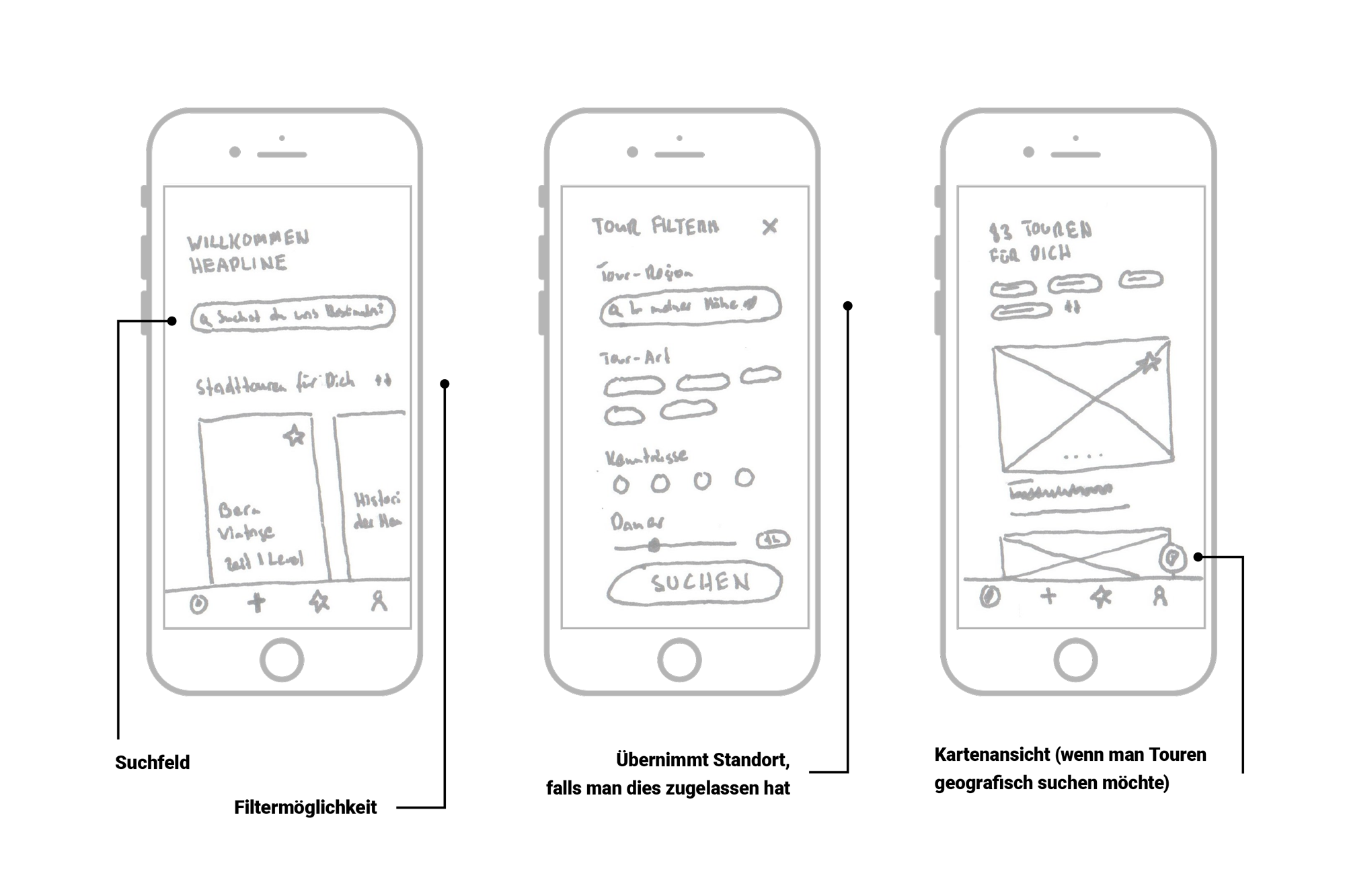
Based on the product vision board and our allocation of the main focus, we designed two user journeys (conduct tour and create guide/list). We used this basis of the user journeys to develop the first visual sketches. I concentrated mainly on the user journey «perform tour».
🚀 Solution
The insights from the research and ideation phases resulted in three guiding principles for the app:
- Your needs are always at the centre
- Experience the city playfully
- Feeling like a local
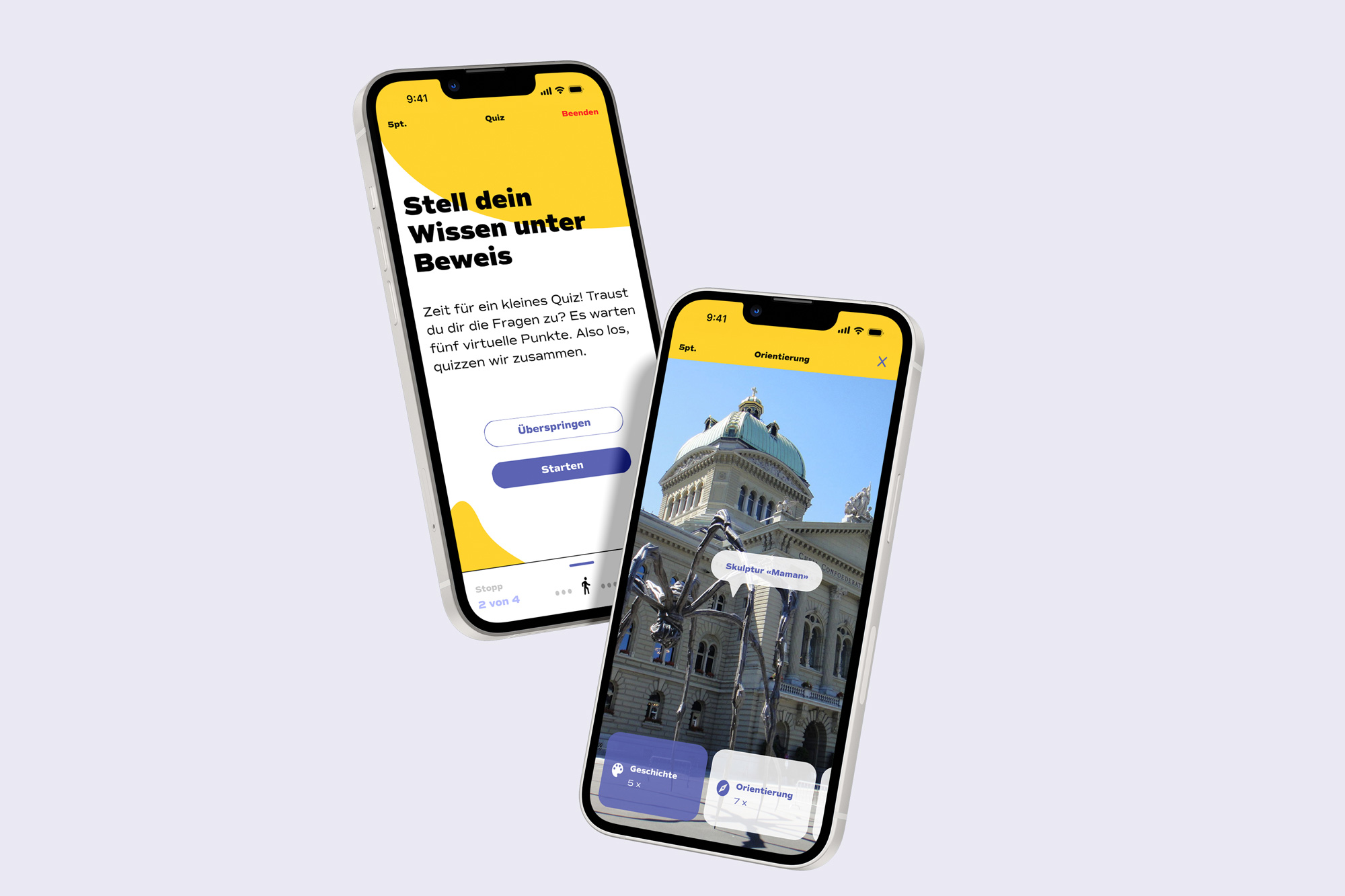
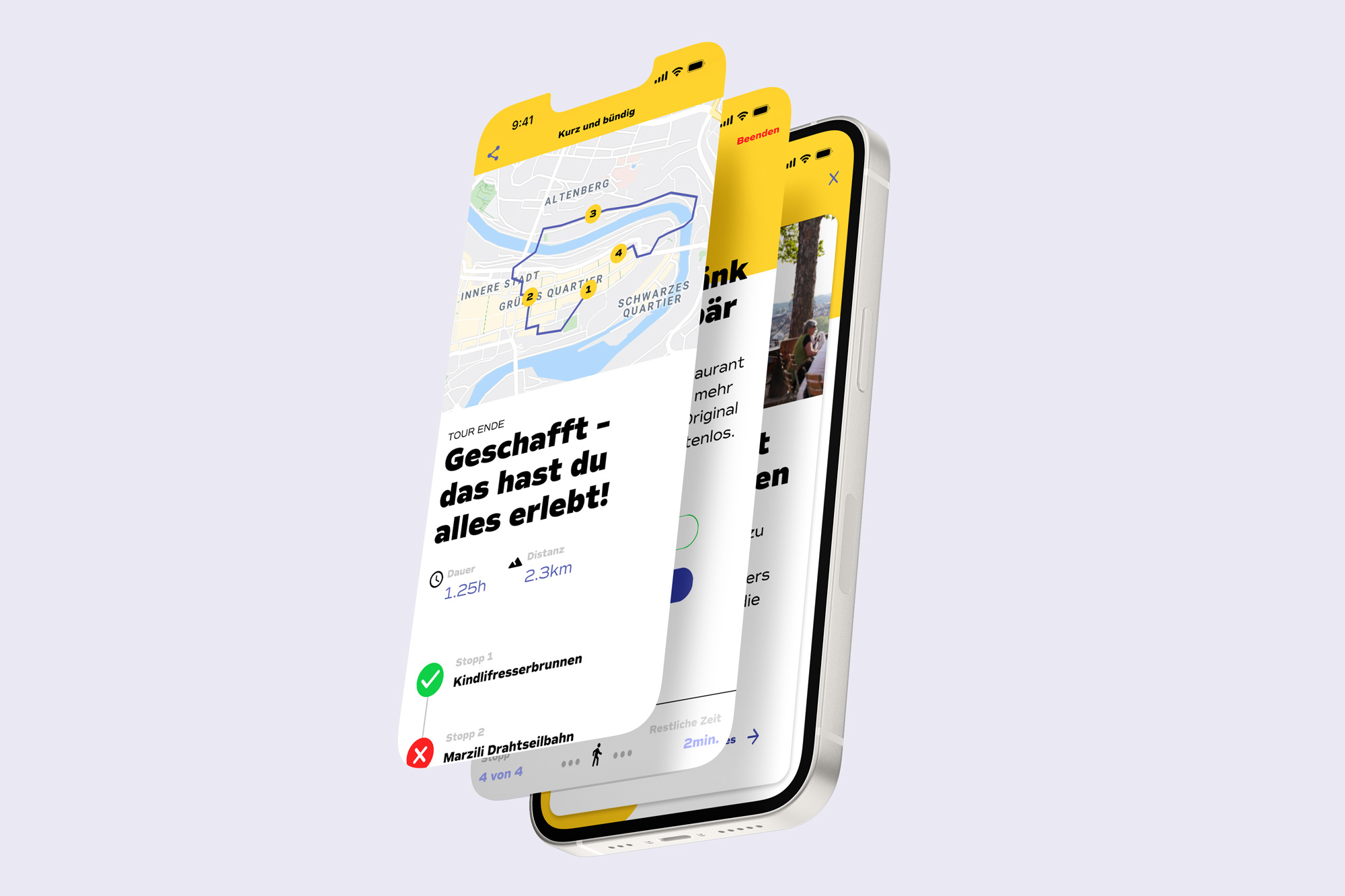
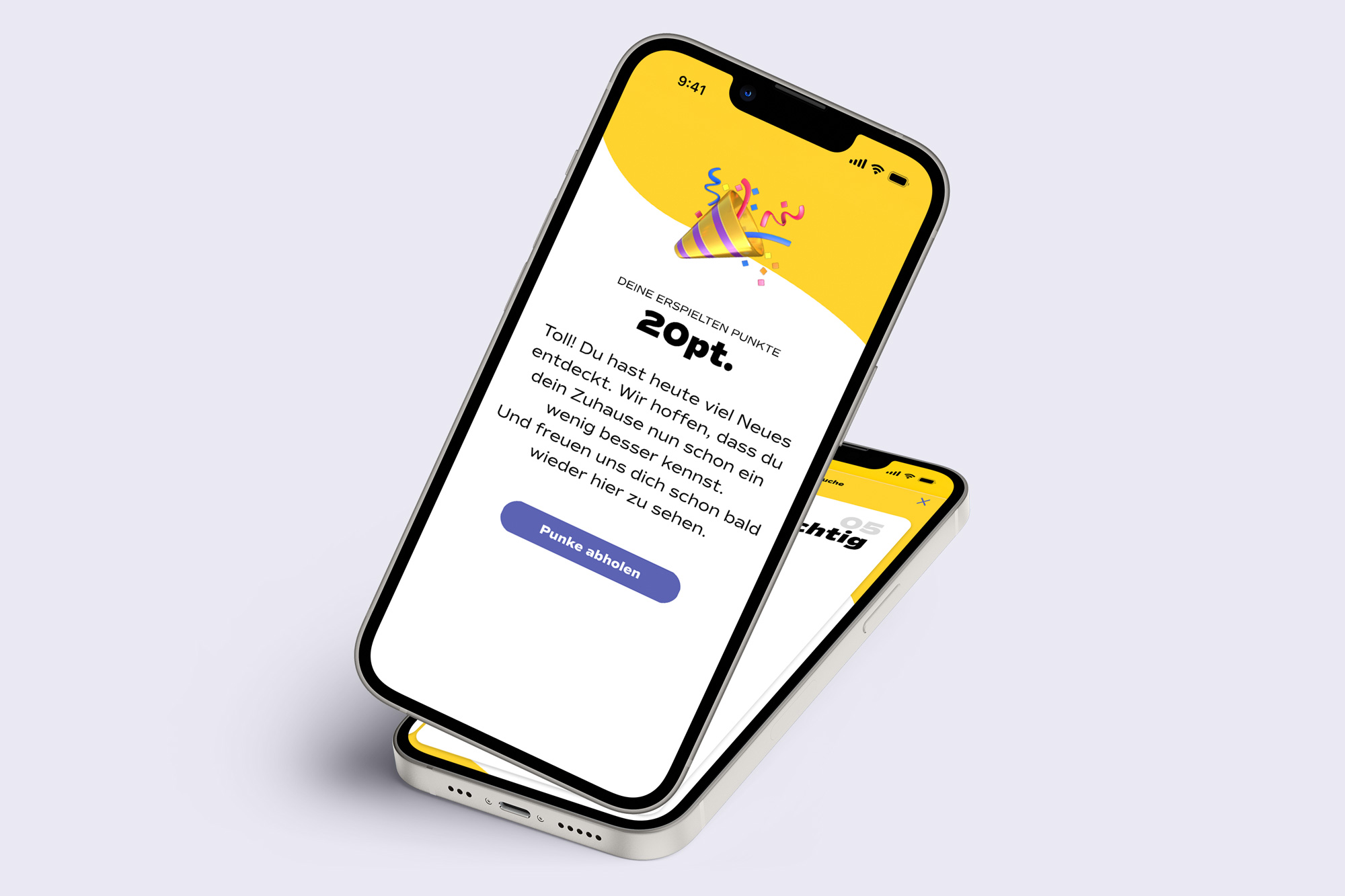
The final design was developed based on the sketches, user journeys and guiding principles. The result is a concept for an app that supports newcomers in discovering Bern, connecting with their surroundings and building a sense of belonging through playful exploration.
The final mockups illustrate the core flows, interactions and overall experience of the application.